
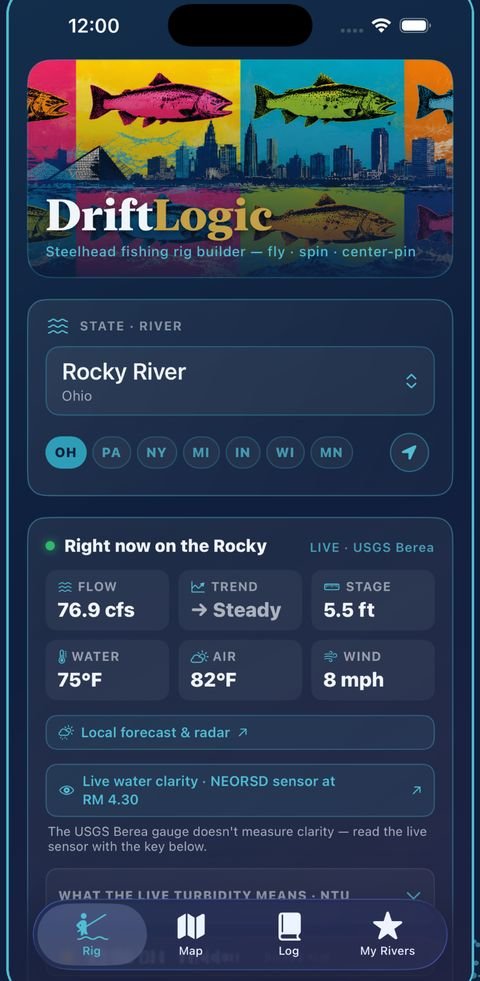
Flow
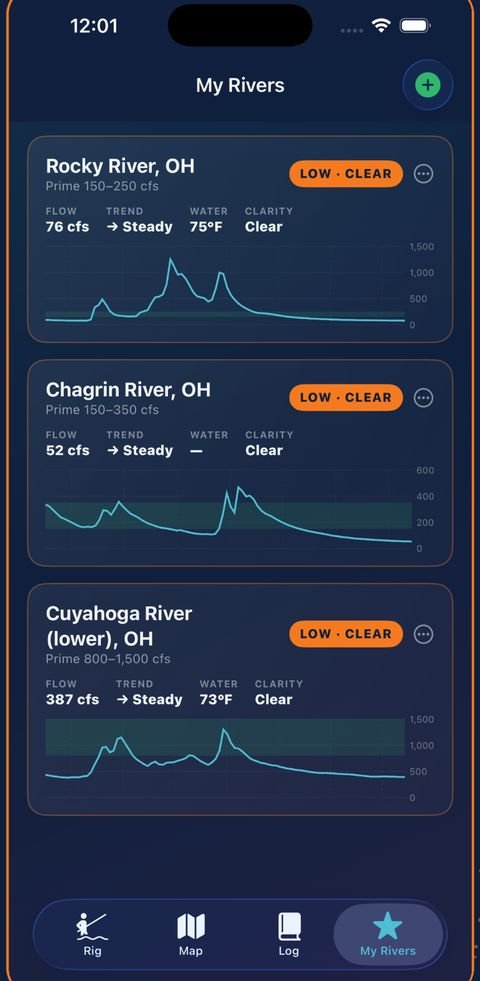
Steelhead will bite in water that is too high. They rarely bite in water they cannot see through. Watch the gauge fall, not the number alone.
A local guide to fishing the Rocky River from late September through April. Live gauge readings, where the fish hold, how long the clay takes to drop out, and honest calls on whether today is worth the drive.
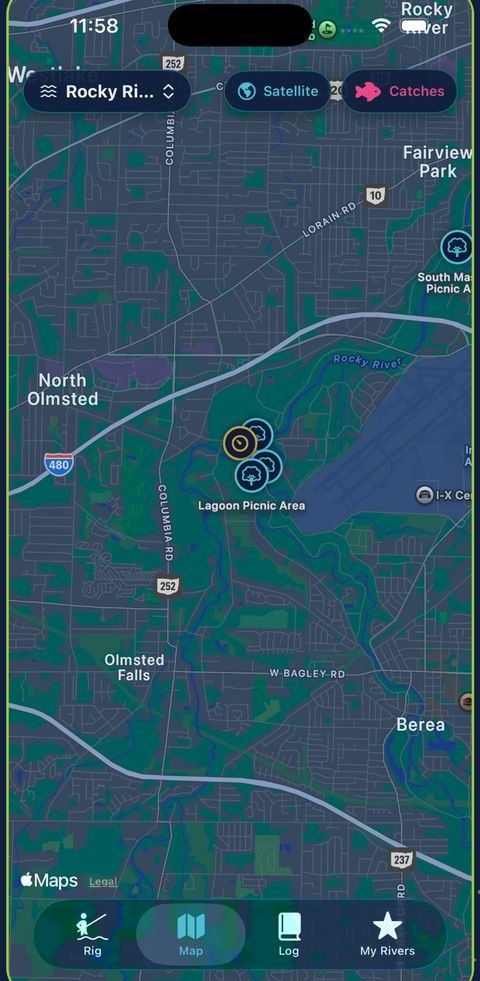
Three variables decide the day on the Rocky: flow, clarity, and how long it has been since the last rain. Clay holds in suspension far longer than silt or sand — expect two to four days of stable, dropping flows before the river is fishable again after a real storm.
Steelhead will bite in water that is too high. They rarely bite in water they cannot see through. Watch the gauge fall, not the number alone.
Glacial clay in the upland soils is why the river runs chocolate after rain. Two feet of visibility is plenty; six inches is not.
Low-level bridges along the Valley Parkway close during high water. When the bridges are closed, go home.
Fish enter the system as early as late September in good water years and run actively through April.
Fish stage at the mouth and move up on the first sustained rain. Warm water, low flows, spooky fish.
The best combination of numbers, water temperature, and aggression. Also the most crowded — fish weekday mornings.
Slow, deep, and technical. Fish hold in sand pockets beside shale ledges and move very little. Slush ice shuts it down.
Snowmelt bumps, rising temperatures, and fish on gravel. Leave spawning fish alone and work the water below them.